Commercial fire alarm inspections are essential for ensuring your building remains safe, code compliant, and ready to respond during an emergency. Unfortunately, many businesses fail their annual fire alarm inspections due to issues that could have been prevented with routine maintenance and professional service.
Understanding the most common reasons for inspection failures can help building owners and property managers avoid costly repairs, code violations, and unnecessary downtime.
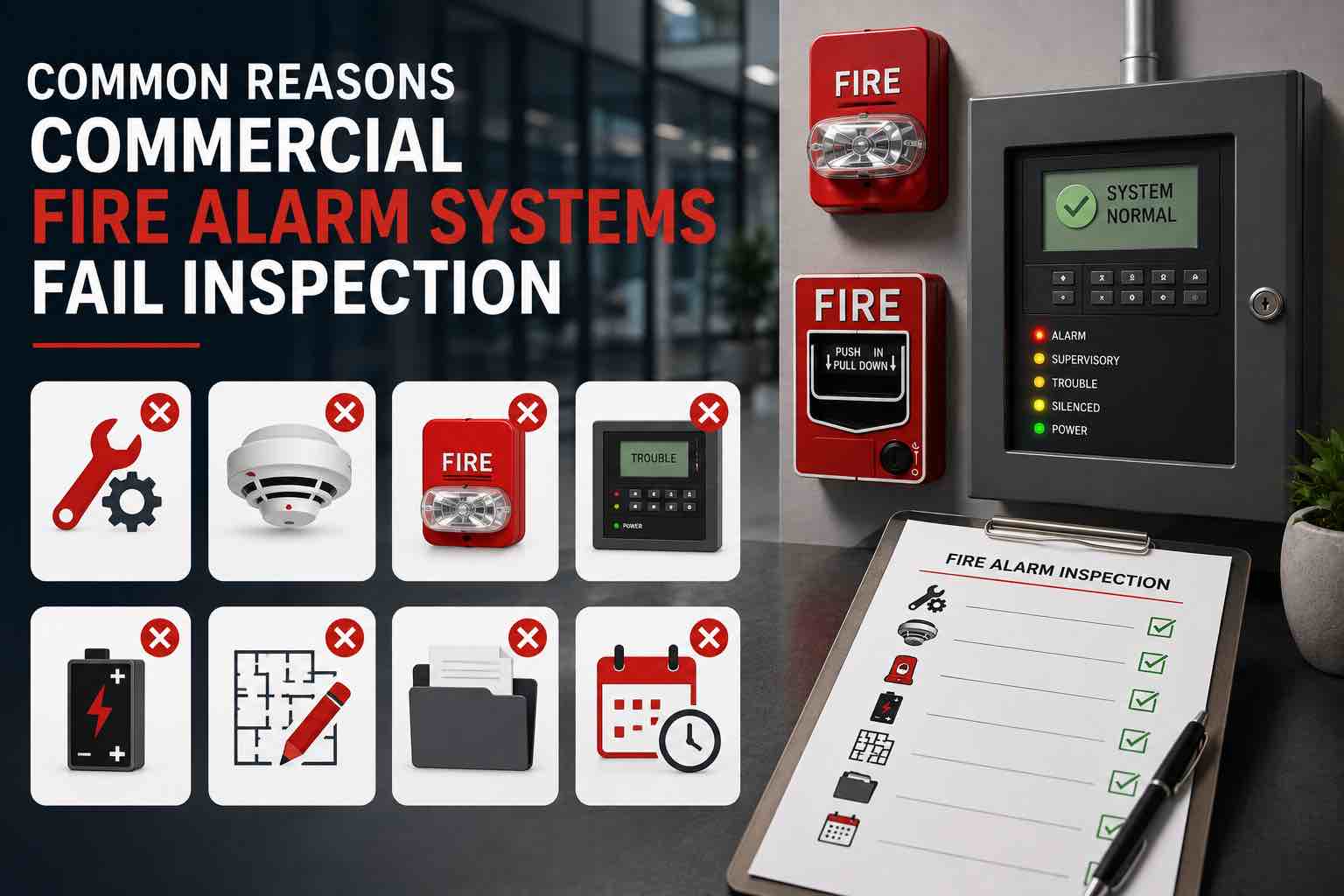
Lack of Routine Maintenance
One of the leading causes of failed inspections is simply neglecting regular maintenance. Fire alarm systems contain electronic components that should be tested and serviced on a routine basis to ensure they operate properly.
Without preventative maintenance, small issues can develop into larger problems that are discovered during an inspection.
Faulty Smoke or Heat Detectors
Smoke and heat detectors must respond quickly and accurately during an emergency. Over time, dust, dirt, age, or physical damage can reduce their effectiveness.
Inspectors frequently identify detectors that:
- Are dirty or obstructed
- Have exceeded their service life
- Fail operational testing
- Have been damaged or painted over
Damaged Notification Devices
Horn strobes and other notification appliances must function properly throughout the building. If occupants cannot clearly hear or see an alarm, the system may not meet code requirements.
Common issues include:
- Non-functioning horn strobes
- Damaged devices
- Blocked notification appliances
- Improper placement after renovations
Fire Alarm Panel Trouble Conditions
Your fire alarm control panel continuously monitors the health of the system. If it displays trouble conditions that haven’t been addressed, your inspection could result in deficiencies.
Common trouble conditions include:
- Communication failures
- Low batteries
- Ground faults
- Wiring problems
- Device failures
Ignoring these warning indicators often leads to inspection failures.
Battery and Power Supply Problems
Commercial fire alarm systems rely on backup batteries to continue operating during a power outage.
Inspectors often find:
- Batteries that no longer hold a charge
- Expired backup batteries
- Improper charging
- Power supply deficiencies
Replacing aging batteries before they fail helps maintain reliable protection.
Building Renovations Without System Updates
Office renovations, warehouse expansions, or tenant improvements often require modifications to the fire alarm system.
If detectors, pull stations, or notification devices are no longer located correctly after construction, the building may not comply with current fire safety requirements.
Whenever your building layout changes, your fire alarm system should be reviewed by a qualified professional.
Poor Documentation
Many inspections require documentation showing previous inspections, testing, repairs, and maintenance.
Missing or incomplete records can delay inspections and create compliance issues, even if the system itself is functioning properly.
Missed Annual Inspections
Some businesses simply allow required inspections to lapse. Missing scheduled inspections can lead to code violations, insurance complications, and increased liability.
Scheduling inspections before they become overdue helps ensure your system remains compliant year after year.
Work with a Qualified Fire Alarm Company
Routine inspections and preventative maintenance are the best way to identify small problems before they become costly violations. A qualified commercial fire alarm company can test every component, perform necessary repairs, maintain proper documentation, and help ensure your building remains compliant with applicable fire codes.
Keep Your Business Inspection Ready
A failed fire alarm inspection can lead to unexpected repair costs, compliance issues, and unnecessary risk. GuardMe Security provides commercial fire alarm inspections, testing, maintenance, monitoring, and system upgrades for businesses throughout New Jersey. Contact our team today to schedule your inspection and keep your fire alarm system operating safely, reliably, and in compliance with local fire codes.