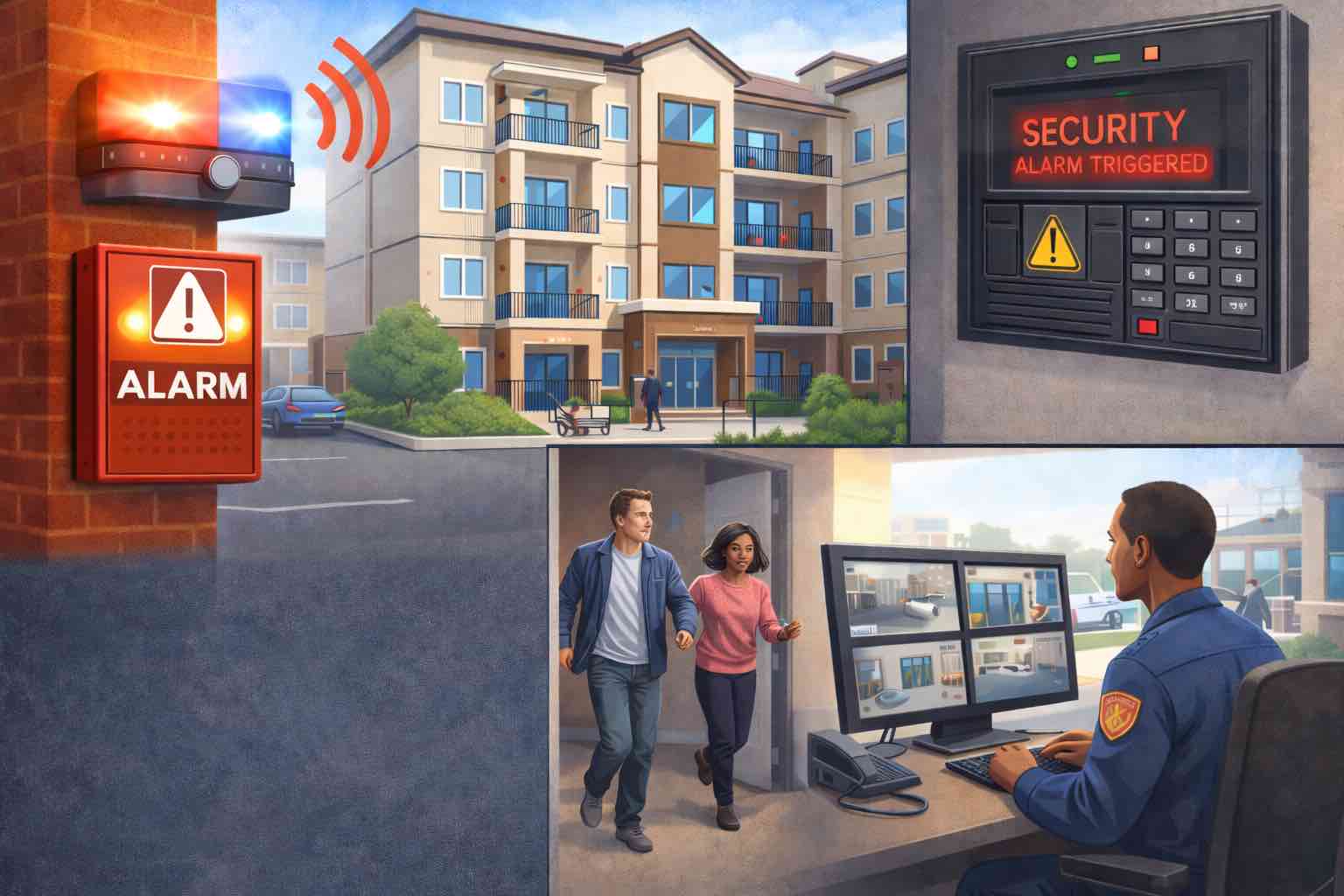
Fire alarm installation in condos and multi-unit residential buildings is not optional—it’s a critical life safety requirement governed by state and local fire codes. Whether you’re managing a condominium association, apartment complex, or mixed-use residential property, installing the correct fire alarm system is essential for occupant safety, code compliance, and liability protection.
Why Multi-Unit Buildings Have Stricter Fire Alarm Requirements
Unlike single-family homes, multi-unit buildings house multiple occupants who share common spaces, exits, and utilities. Because fires can spread quickly and evacuation is more complex, fire codes require more robust detection, notification, and monitoring systems.
Fire alarm systems in these buildings are designed to:
- Detect fires early
- Alert all occupants clearly and simultaneously
- Automatically notify emergency responders
- Provide system-wide visibility for inspections and maintenance
Common Fire Alarm System Requirements for Condos and Multi-Unit Housing
While requirements vary by jurisdiction, most condo and multi-family buildings must include the following components:
- Smoke and/or heat detection in units, hallways, and common areas
- Manual pull stations near exits and stairwells
- Audible and visual notification devices (horns and strobes) throughout the building
- A central fire alarm control panel for system management
- Professional monitoring to ensure emergency services are notified automatically
Larger or newer buildings are often required to use addressable fire alarm systems, which identify the exact device or location triggering an alarm.
Unit-Level vs. Common-Area Coverage
In many condo buildings, fire alarm responsibilities are split between individual units and shared spaces. Unit-level requirements may include smoke alarms or interconnected detectors, while the association is typically responsible for hallways, stairwells, mechanical rooms, garages, and other common areas.
A properly designed system ensures all areas work together as one coordinated network.
Monitoring Requirements
Most jurisdictions require multi-unit residential fire alarm systems to be professionally monitored. Monitoring ensures that if a fire occurs—especially after hours—emergency responders are dispatched immediately, even if no one is present to call 911.
Monitoring is also often required by:
- Local fire officials
- Insurance carriers
- Mortgage lenders
- Property management agreements
Installation, Permits, and Inspections
Fire alarm systems must be designed and installed by licensed professionals. The process typically includes:
- System design based on building layout and occupancy
- Permit approval from the local authority having jurisdiction (AHJ)
- Professional installation
- Acceptance testing and final inspection
- Ongoing testing, inspection, and maintenance
Skipping steps or using unqualified installers can result in failed inspections, fines, or forced system replacement.
Ongoing Compliance Matters
Fire alarm compliance doesn’t end after installation. Condo and multi-unit buildings are usually required to undergo annual inspections and routine testing to ensure systems remain operational. Proper documentation is critical for passing inspections and reducing liability.
Start Designing Your Multi-Unit Fire Alarm System with GuardMe
Managing fire alarm requirements for a condo or multi-unit building doesn’t have to be complicated. GuardMe Security specializes in designing, installing, and maintaining code-compliant fire alarm systems for multi-family properties. Contact us today to schedule a professional assessment and ensure your building is protected, compliant, and inspection-ready.